 sale01@dkmbio.com
 Tel:86-755-2896 1872

Yang Chaowen Exclusive Interview: C46 Ceramides – A Milestone for Domestic Cosmetic Raw Materials
Author: Dieckmann Date :2026-07-31 Click :
Introduction: C46 ceramide: Breaking the deadlock and reshaping the rules for Chinese raw materials. (An interview from Raw Material Gateway)
What if you were told that a Chinese ceramide has gained authoritative recognition from both domestic and international industry experts? Would you believe it?
Yang Chaowen, founder of Shenzhen Dieckmann Biotechnology Co., Ltd., and his team have achieved this with C46 ceramide—a feat that represents not just a technological breakthrough, but a revolution in "Intelligent Manufacturing in China" for cosmetic raw materials, ushering in a new era of skincare with C46 ultra-long-chain ceramides.
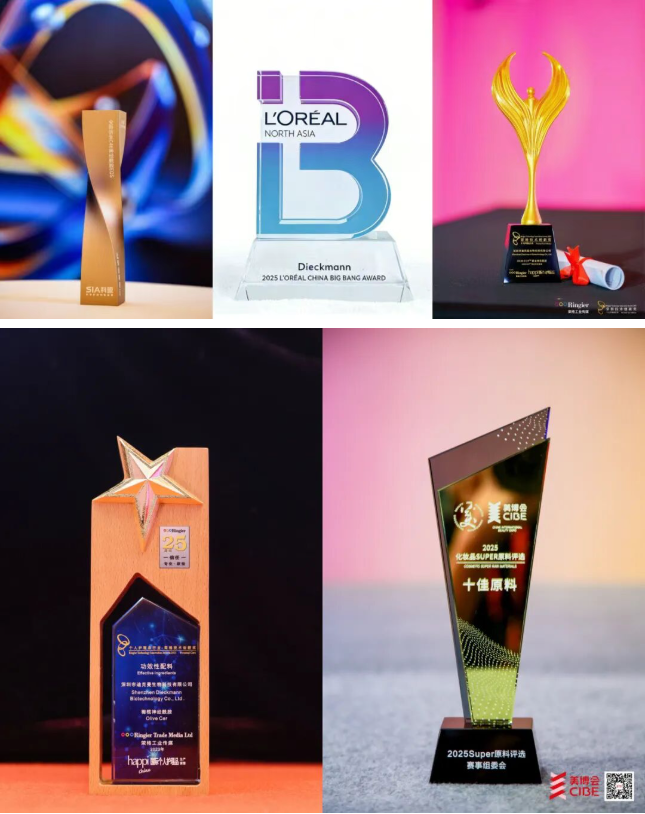
As China's cosmetics industry transitions from a "marketing-first" to an "R&D-driven" phase, a crucial "battle" for core raw materials has long been underway upstream in the industrial chain. In the past, we were accustomed to discussing the "myths" of foreign raw materials. Today, a new generation of Chinese innovators is rewriting the rules, contributing Chinese wisdom into the global beauty market with independently developed and core raw materials/ingredients.
Yang Chaowen, General Manager of Shenzhen Dieckmann Biotechnology Co., Ltd., is precisely such a game-changer. A Class C talent under the Shenzhen Peacock Plan and an industry mentor at Southern University of Science and Technology, he has led his team to delve deep into the seemingly small yet critically important world of "small molecules." They have not only successfully broken the foreign monopoly on high-end raw materials like ceramides but have also built a solid technological moat with cutting-edge technologies such as "AI design + green synthesis."
Public information shows that Shenzhen Dieckmann Biotechnology Co., Ltd. is a national-level high-tech enterprise founded by the Shenzhen Peacock Talent Team. Focused on small-molecule active ingredients for general health, the company leverages platforms for AI molecular design, green synthesis, and application transformation. It concentrates on the molecular innovation, efficacy exploration, and application transformation of active ingredients, strictly adhering to the ISO9001 quality management system. Dieckmann provides high-quality products and services to global health and beauty companies, striving to become the premier brand for innovative ceramides in China.
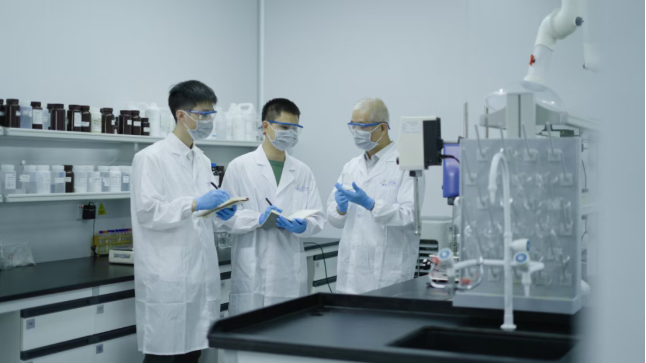
Recently, a reporter from Raw Material Gateway visited Dieckmann Biotech in the Zhongcheng Biomedical Industrial Park, Pingshan District, Shenzhen, for an exclusive interview with Yang Chaowen. He shared how he is using "small molecules" as a lever to propel the future of China's cosmetic raw material industry.
From Peacock Talent to Industrial Mission
Filling the Gap in Chinese Raw Material Innovation
"Contributing Chinese wisdom to the world's cosmetics industry"—this powerful mission is not just an empty slogan but a strategic choice based on Yang's deep industry insight.
Reflecting on the start of his entrepreneurial journey, he candidly noted that over the past decade, while China's cosmetics industry has flourished, it has largely benefited from the expiration of foreign patents on active ingredients. Among the myriad ingredient lists, truly "Chinese-created" original active raw materials are few and far between, aside from hyaluronic acid, collagen, and certain plant extracts. This lack of core raw materials has constrained the ability of Chinese brands to expand the value chain.
Yang keenly identified a significant opportunity: "China has profound innovative technological capabilities, and with the correct guidance from new national cosmetic regulations and policies, Chinese companies are fully capable—and it is time—to contribute Chinese wisdom to the world's cosmetics industry." He firmly believes that once the channels for innovation are opened, companies dedicated to technological innovation will have vast room for growth.
This initial vision—to deeply integrate cutting-edge research with industrial needs—drove his transition from pure academic research to the challenging path of industrialization. He precisely focused on the high-tech-barrier, high-value-added sector of cosmetic functional raw materials, particularly the field of ceramides, often referred to as the "mortar" of the skin barrier.
The transformation from laboratory to production line requires a supportive environment. Shenzhen, known as the "City of Innovation," provided the crucial nutrients for the birth and growth of Dieckmann.
In the interview, Yang particularly emphasized the substantial support provided by Shenzhen's entrepreneurial environment and policies like the "Peacock Talent Program." Shenzhen's inclusiveness and high regard for talent not only gave the company a higher starting point but also provided vital assistance in overcoming critical technological bottlenecks, such as those in ceramide production.
"The very DNA of Dieckmann is innovation," Yang stated. Shenzhen's environment makes building sustainable, innovation-centered competitiveness the company's foundational logic. Policy support alleviated the financial pressure of early-stage R&D, allowing the team to focus more single-mindedly on technological breakthroughs, winning precious time to build its intellectual property moat.
Building a "Small Molecule World"
Technological Barriers and Business Model
When discussing competitive barriers, many companies emphasize technological leadership. However, Yang has a deeper insight: "Dieckmann is building more than just a technological moat; technological advantages must ultimately translate into product advantages. Therefore, our core moat is an intellectual property moat."
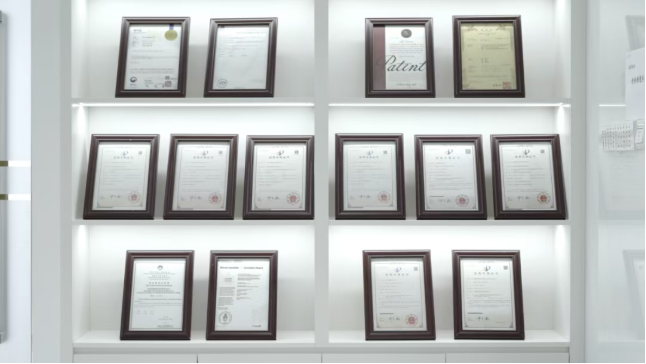
Currently, Dieckmann has filed over 80 invention patents, the vast majority focused on ceramides, constructing an intellectual property network covering multiple dimensions such as "new molecular structures, new efficacies, new uses, and formulation applications." This ensures that innovations are not easily replicated, solidifying technological advantages into long-term market advantages. Thus, Dieckmann's core moat stems from its IP strategy, driven by its technological edge.
The company's R&D philosophy is vividly summarized as "building a rich and diverse world of small molecules." Yang explained that there are naturally thousands of different ceramides in the skin, showcasing diversity. Dieckmann focuses on small-molecule actives precisely to mimic and enrich this natural diversity. From pioneering C46 ceramide EOP, to filing for the first domestic new ceramide raw material EOS (NMPA New Cosmetic Raw Material 20250067), to its second new raw material—Dieckmann-Cer™ Retinoic(S)((NMPA New Cosmetic Raw Material 20260003)—and developing hundreds of plant-derived ceramides, Dieckmann is building an increasingly vast "small molecule" library.
"Don't you think these small molecules are incredibly diverse and fascinating?" Yang asked rhetorically. "Dieckmann's goal is to commercialize products that reflect this ceramide diversity. Through a rich variety of products and functions, we aim to build a healthy skin ecosystem and, on this basis, achieve high-level functional skincare."
Different from traditional raw material suppliers, Dieckmann summarizes its business model as "small-molecule functional raw materials + application solutions + services." Yang used a vivid analogy to explain its advantage: "We not only produce differentiated 'high-quality rice' for our clients but also offer the 'recipe for cooking great rice.'"
The cosmetics industry is a blend of fashion, science, and art, requiring rapid iteration. The traditional "purchase and sell raw materials" model often creates a disconnect with brands' practical application needs. Dieckmann's "solutions + services" model, anchored by its robust small-molecule innovation and application platform, can better address the diverse needs of its clients.
Dieckmann deeply understands the functional requirements and story attributes (e.g., anti-aging for sensitive skin, emergency repair) that brands want to incorporate into their products. It then selects or customizes the most suitable active ingredients from its "small molecule world," providing scientific data support, application solutions, formulation advice, and scenario-based product selling point refinement.
This deep collaboration significantly reduces R&D trial-and-error costs for brands, accelerates the market launch of innovative products, and thus "multi-dimensionally empowers brands to enhance their differentiated competitiveness."
During the interview, Yang highlighted two "benchmark" raw materials from Dieckmann: Ceramide EOS and DKM-Cer™ Retinoic(S).
Ceramide EOS: Ushering in the Era of Ultra-Long-Chain Skincare
As the first innovative new ceramide raw material to complete filing in China, the birth of EOS is a milestone. Based on the carbon chain length distribution in human-identical ceramides, C46 has the highest abundance. Therefore, C46 Ceramide EOS is more biomimetic. It is an ultra-long-chain ceramide closely associated with various inflammatory skin diseases, forming the LPP (Long Period Phase) structure—a key component of the skin barrier function—and EOS has significant soothing, anti-inflammatory-aging, and anti-itch effects.

Yang revealed that the biggest challenge in developing EOS was the scaled preparation process for its core synthetic building block—sphingosine (S). "Dieckmann was the first company in China to achieve large-scale production of sphingosine, which is why we were able to be the first in the industry to launch a series of ceramides related to S, such as NS and AS." The breakthrough in this fundamental technology was the foundation for the success of EOS and subsequent product lines.
Yang introduced that in the development of EOS, the combination of "AI design + green synthesis" technologies played a crucial role. AI design helped the team plan molecular structures more precisely and efficiently, saving significant R&D funds and time. At the same time, the green synthesis process ensured the production process was environmentally friendly and sustainable. The C46 ultra-long-chain ceramides (including EOS and EOP) prepared with this technology have, for the first time, guided the cosmetics industry into a new phase of healthier skincare with ultra-long-chain ceramides (C46), moving beyond long-chain ceramides (C36). This transition—from SPP (Short Period Phase) to LPP (Long Period Phase)—provides the industry with higher-level, more biomimetic, and healthier raw material options.
DKM-Cer™ Retinoic(S): The Optimal Solution for Sensitive Skin Anti-Aging
Yang believes this ingredient directly addresses a key market pain point: how can people with sensitive skin safely and effectively combat aging? Although retinol is a leading "gold standard" anti-aging ingredient, its irritation and instability limit its application, especially for sensitive skin.
Dieckmann artistically combined retinoic acid and ceramide at the molecular level to develop Retinotic Ceramide (S). Yang explained the design rationale: "By mimicking the excellent structure of ceramides, we upgraded retinol at a molecular level to eliminate its irritation issues while imparting soothing and repairing effects." Experimental data shows its cell viability enhancement reached 13 times that of retinol.
This "dual-effect" ingredient, utilizing intelligent transdermal delivery technology for dermal delivery, successfully transforms a "potent but harsh active" into a "gentler yet effective treatment," providing a scientific and effective solution for the challenge of sensitive skin anti-aging, breaking the taboo against using retinol in this area.
Currently, the cosmetics industry is undergoing a profound shift from marketing-driven to R&D-driven growth. Consumers are becoming more rational, paying attention to ingredients and real efficacy. Yang believes this presents a golden opportunity for raw material companies with genuine innovative capabilities, promoting the healthy and sustainable development of the entire industry.
However, opportunities come with serious challenges. "The challenge isn't actually about how difficult innovation is," he said, his tone turning serious. "It's about innovative achievements being ignored, intellectual property being trampled, and the market being disrupted." Infringement not only directly dampens the enthusiasm of innovative companies and erodes their market share but also has a more profound impact: it causes brands to miss opportunities to create blockbuster products using high-quality innovative raw materials. Ultimately, it weakens the overall competitiveness of Chinese brands and harms the country's international image and influence in the high-end raw material sector.
Looking ahead, Dieckmann is not resting on its achievements. Yang revealed that the company has made deep integrations and systematic layouts in cutting-edge areas such as AI-assisted R&D, green biosynthesis, precision skincare (e.g., microbiome regulation), and various drug delivery technologies. "We integrate multiple technologies to develop small-molecule actives and apply various drug delivery technologies for the transdermal delivery of these small molecules." This integration capability across technology platforms aims to continuously consolidate its professional depth and breadth in the field of ceramides and related small molecules.
"We hope to leverage our years of technological reserve, fully utilize our dual platform of small molecule innovation and application solutions, strengthen our ceramide product matrix and high-level functions, and restore ceramides to their rightful prominence," Yang stated clearly. "Our vision is for Dieckmann to become an indispensable force in the global ceramide field."
Deep industry-university-research integration—sowing the seeds of future innovation and building a talent foundation—is a core development strategy for Dieckmann. As an entrepreneur, researcher, and industry mentor, Yang places special importance on collaborations with universities, such as the deep partnership with the College of Pharmacy at Shenzhen Technology University.
In his view, this model not only builds a bridge from theory to practice for students, nurturing compound talents with both professional skills and innovative capabilities, but also injects fresh energy into the enterprise, enhancing its technological R&D and talent reserve competitiveness. This ultimately fosters a virtuous innovation ecosystem of "talent cultivation - technological iteration - industrial upgrading."
Commitment to Technological Innovation
Empowering "Chinese Intelligent Manufacturing"
When asked how he balances his multiple roles as entrepreneur, scientist, and mentor, Yang gave a concise and powerful answer: "My self-identification is essentially as a scientific and technological worker."
He believes the key is to integrate multiple thinking models—the rigor of a scientist, the market insight of an entrepreneur, and the foresight of an educator. The underlying logic that ties everything together is: "If you believe something is scientifically correct, then persevere." This persistence, rooted in his scientific core, may be the key reason Dieckmann can focus on deep research and achieve breakthroughs in a volatile market.
Enabling global brands to confidently use innovative Chinese raw materials is Yang and Dieckmann's ambitious goal.
On the path to promoting Chinese cosmetic raw materials overseas and gaining international recognition, he believes the most critical aspect needing a breakthrough currently is "building brand power." This brand power signifies not just name recognition but also international clients' deep trust in the comprehensive competitiveness of Chinese raw materials in terms of differentiated innovation, one-stop solution services, and a stable, excellent quality system.
Yang emphasized that Dieckmann's sustainable development plan revolves around these three pillars: continuously building core competitiveness, consistently endowing its branded products with solid scientific attributes, and striving to become "China's premier innovative ceramide brand." This foundation will allow Dieckmann to lead the future innovation of ceramides and step onto the world stage.
From laboratory "small molecules" to technical collaborations with global beauty giants, Dieckmann's C46 ceramide proves the boundless potential of Chinese raw material innovation.
From filling gaps to defining standards, from technological breakthroughs to ecosystem building, Yang Chaowen and his company, Dieckmann, are carving a distinct mark on the map of China's cosmetic raw materials with their profound understanding and hardcore innovation in the "small molecule" world. Dieckmann's entrepreneurial and innovative journey is not just a company's growth story but a microcosm of the Chinese cosmetics industry's upward trajectory and its shift towards "Intelligent Manufacturing."
Dieckmann is breaking foreign monopolies with "AI design + green synthesis", defining industry standards with its IP moat, and restructuring industrial value with its "raw material + solution + service" model.
With the ambition of scientific and technological workers, Yang and his team are inscribing the ambition of "Intelligent Manufacturing in China" onto the future of cosmetic raw materials—showing the world that Chinese innovation can not only define ingredients but also define trends.
As more and more companies like Dieckmann emerge, equipping domestic brands with a true "Chinese Core," the future where the Chinese cosmetics industry plays a leading role on the global stage is well worth anticipating.
 Return list